You love the idea of falling asleep under a sky full of stars, but the reality of a thin sleeping bag, a lumpy patch of ground and a shared pit toilet? That’s where the romance usually dies. So if you’ve been wondering what is glamping and whether it could be your middle ground between the outdoors and a decent night’s sleep, this guide is for you.
Below, we’ll walk through exactly what glamping is and how it differs from a regular tent trip, what you can typically expect (and what you shouldn’t assume) in a stay, how much it usually costs, the best times to book, and how to plan a first trip that won’t overwhelm you. We’ll finish with packing and budget tips and a quick reality check on whether glamping actually suits your travel style. By the end, you’ll know whether a safari tent or a cozy dome is your next weekend plan.
What Is Glamping, Exactly?
Glamping is short for glamorous camping, and the name does most of the explaining. Instead of pitching your own tent on uneven ground, you arrive at a structure that’s already set up for you, complete with a real bed, solid shelter and comfort extras you’d never find in a backpack. The setting is genuinely outdoorsy, but the experience leans closer to a boutique hotel room that happens to sit in a forest, on a hillside or beside a lake.
How does it differ from traditional tent camping? With a regular campsite, you bring everything yourself: the tent, sleeping pads, cooking gear and a good dose of patience. Glamping removes that entire setup phase. You carry in a duffel bag, not a roof rack full of equipment, and someone else has already dealt with the weatherproofing and the mattress.
It’s also not the same as renting a cabin. Cabins are permanent buildings, usually with full kitchens, plumbing and walls you can’t see through. Glamping sits between tent and cabin: the structures are often semi-portable or canvas-based, so you get more nature sounds through the walls (or fabric) and a stronger sense of sleeping outside, while still keeping the bed and the warmth.
The structures you’ll actually sleep in
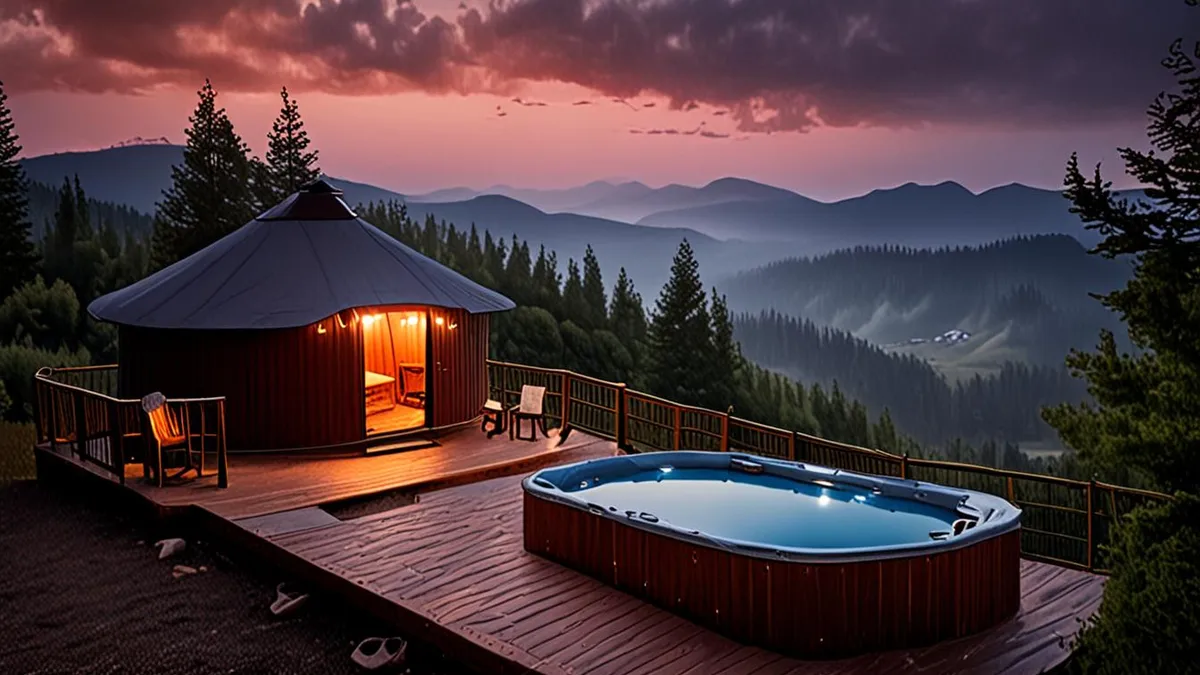
Glamping comes in more shapes than most beginners expect. Safari tents are large canvas tents on raised platforms, popular for their space and that classic safari-lodge feel. Yurts are round, lattice-walled tents with domed ceilings that stay surprisingly cozy in cool weather. Geodesic domes are those rounded, often transparent structures that have become the poster child of luxury camping, sometimes with windows framing the landscape.
Beyond those, you’ll find A-frames with dramatic angled roofs, treehouses built on platforms among the branches, and converted trailers or vintage campers that blend retro charm with a proper mattress. Each type changes the vibe and the price, so it pays to know which one appeals before you book.
What You Typically Get (and Don’t Get) in a Glamping Stay
The core promise of glamping is simple: the basics are handled. Most sites include a real bed with proper linens, lighting you don’t have to rig yourself, and heating to take the edge off cool nights. Many also add a private bathroom or at least a small kitchenette, though this varies a lot from site to site and is the single most important thing to confirm before you book.
Beyond the basics, hosts compete on extras, and this is where glamping gets fun. Wood-fired hot tubs are a signature upgrade at many sites, especially in cooler regions. Fire pits with seating, breakfast baskets left at your door, and stargazing decks with lounge chairs are all common touches that turn a one-night stay into something memorable.
Check these details before you book
Two questions matter more than any photo gallery: where do you shower, and can you cook? Read the listing carefully and, if it’s unclear, message the host. Here’s what to look for:
- Bathroom setup: some sites give every unit an en-suite bathroom, while others use a shared bathhouse a short walk away. If you’re traveling with someone who values privacy, confirm this in writing before booking.
- Cooking facilities: a kitchenette might mean a two-burner stove and a small fridge, or just a kettle and a microwave. If the site has none, plan for nearby restaurants or bring no-cook food.
- Heating source: a wood stove is charming but needs tending overnight; electric or propane heat works without effort. Ask which one your unit has if you’re going in a cooler month.
- Water and power: some remote units run on limited solar power or bottled water. Knowing this in advance helps you pack the right chargers and expectations.
Ten minutes of checking now saves you from arriving at a beautiful tent with no way to make coffee and a communal shower queue at dawn.
How Much Does Glamping Cost?
Glamping costs more than pitching your own tent, but the range is wide. In the US, a typical night runs from about $100 at the simple end to $500 or more for large domes, treehouses or stays with serious amenities. In Europe and Asia, entry points are often lower, with basic glamping units starting from around $80 a night, especially outside major tourist regions.
What drives the price up or down
Four factors matter most. First, structure type: a simple canvas tent costs far less than a geodesic dome with panoramic windows or a custom treehouse. Second, the private bathroom: an en-suite shower and toilet can add a meaningful chunk to the nightly rate compared with shared facilities. Third, season: peak summer weekends and holiday periods command the highest rates, while shoulder and off-season dates drop noticeably. Fourth, location: sites near national parks, coastlines or major cities charge a premium over ones an hour further out.
How it compares to regular camping
For context, a basic campground site with your own tent is one of the cheapest ways to sleep outdoors. Mid-range glamping usually sits 2-4 times the price of that basic site. That premium buys you the bed, the shelter already standing, and the hours you’d otherwise spend packing, pitching and packing again. Whether that trade is worth it depends on the trip: for a one-night stop, the math favors glamping; for a week-long stay, the cost gap gets harder to ignore. Check current rates for your dates and region, since prices shift with demand and new sites open constantly.
When to Go: Seasons and Booking Windows
Glamping follows the same rhythm as regular travel: high season means high prices and busy sites. Across the Northern Hemisphere, peak season runs roughly May through September, when the weather is warmest and families are on summer break. If your dates are flexible, April and October are shoulder months that usually cost noticeably less while still offering pleasant nights outdoors.
Booking timing matters as much as the dates themselves. Popular sites are small — often just a handful of tents, domes or yurts — so weekends in high season fill up fast. For a peak-season weekend, aim to book 2-6 months ahead. For summer holidays, when demand is at its highest, stretch that window to 3-6 months to avoid settling for leftover dates.
Off-season stays are the budget traveler’s secret weapon. Rates drop, sites are quieter, and you often get more attention from hosts. The trade-off is cold: many structures rely on wood stoves or space heaters, so heating quality matters a lot in the colder months. Ask the host how the unit stays warm before you commit to a winter night.
- Midweek nights in peak season are often easier to book than Fridays and Saturdays, and some hosts price them lower.
- Shoulder-month trips can feel more private — fewer neighbors means less noise around shared fire pits and bathrooms.
- If you book an off-season stay, confirm whether heating is included or costs extra, such as a per-night fee for firewood or propane.
- Rainy shoulder months can mean muddy paths, so check whether the site has covered walkways or gravel access to the units.
How to Choose Your First Glamping Trip
Your first glamping trip should feel like a treat, not a logistics challenge. The good news is that a little planning goes a long way, and three simple decisions will shape most of your experience: what you sleep in, how far you drive, and what past guests have to say. Get those right and the rest of the trip tends to fall into place on its own.
- Match the stay type to your comfort level. If you’re new to sleeping outdoors, start with a cabin or yurt — both feel closer to a small hotel room, with solid walls or insulated fabric and a sturdy door. If atmosphere matters more to you than coziness, a geodesic dome or safari tent delivers more of that “sleeping in nature” feeling while still giving you a real bed. There’s no wrong answer here, just a trade-off between comfort and novelty.
- Keep the drive short. Look for sites 1-3 hours from home. That distance is close enough for a relaxed weekend without exhausting travel days, and it keeps fuel and time costs low while you figure out whether glamping suits you. It also means you can easily bail to a hotel nearby if the weather turns miserable.
- Read recent reviews carefully. Focus on what recent guests say about weatherproofing (does the tent leak or get drafty?), noise (thin walls, nearby roads, roosters at dawn), and bathroom quality (private or shared, clean or tired). Reviews from the last few months tell you far more than a property’s own photos, which are often taken at opening or after a full renovation.
Once you’ve picked a structure and a site, send the host a quick message with any questions about heating, bathrooms or arrival times. Responsive hosts are usually a good sign of a well-run site, and clear answers make that first night far smoother. If a host takes days to reply before you’ve paid anything, expect the same pace once you’re on site.
Finally, don’t over-plan your first outing. One or two nights at a single site is plenty to learn what you like, and a shorter stay means a cheaper experiment if glamping turns out not to be your thing.
Packing and Budget Tips for Glamping Newbies
One of the best things about glamping is how little you need to bring. The bed, linens and lighting are usually handled, so your packing list shrinks to the practical stuff that makes outdoor nights comfortable. A few smart items and a couple of budget habits will make your first trip easier and cheaper.
Even with bedding provided, evenings outside can get chilly and dark fast. Pack layers you can add or shed, closed-toe shoes for walking on gravel or grass, and a flashlight or headlamp for trips to the bathroom after sunset. If the site has no kitchenette, bring your own snacks and drinks — and check whether firewood is sold on site or whether you need to bring your own.
- A reusable water bottle saves repeated trips to a shared tap or camp store, and many sites have potable water on hand.
- A small power bank keeps phones charged where outlets are limited to the main lodge or common area.
- Bug spray and a lightweight long-sleeve layer matter more than you’d think for evenings around the fire pit.
- A cooler bag lets you bring perishables and drinks even when there’s no fridge in your unit.
To trim costs, travel in the shoulder months when rates drop and sites are quieter. Sharing also helps: larger tents and domes often sleep several people, so splitting one unit with friends cuts the per-person price dramatically compared with booking separately. Check the site’s cancellation policy before booking, since cheaper off-season dates sometimes come with stricter terms.
Is Glamping Right for You?
So, is glamping the answer to your camping dilemma? If the thought of drifting off to crickets and waking up to birdsong appeals to you, but a thin sleeping bag over hard ground and a shared pit toilet sound like misery, then yes, it probably is. Glamping gives you the outdoors without giving up the essentials: a real bed with linens, solid shelter over your head, and often a private bathroom.
Plan for roughly $100-$500 per night in the US, book 2-6 months ahead for peak weekends, and keep your first trip simple by choosing a site 1-3 hours from home. One weekend is usually enough to know whether this style of travel suits you. Have you tried glamping yet, or are you still deciding? Leave a comment or share this article with a friend who needs a nudge.