Most first-time safari guests make the same two mistakes: they arrive with a bulky hard suitcase that a small bush plane refuses to load, or they forget the essentials that actually matter, like neutral-colored clothing and a decent pair of binoculars. Both mistakes cost you money, time, or comfort once you are deep in the bush. A good safari lodge packing list removes the guesswork before you ever zip up your bag.
This guide walks you through everything that earns a place in your duffel and everything you should leave at home. We start with your luggage itself, because the bag you choose matters more than what goes inside it. Then we cover layered clothing for cold mornings and hot afternoons, the gear worth its weight, and health essentials for lodges far from a pharmacy. You will also find a clear list of items most lodges already provide, so you can skip them, plus budget-friendly tips for renting, borrowing, or buying second-hand. A final checklist ties it all together the week before departure.
Why a Smart Safari Lodge Packing List Starts With Your Luggage
Before you think about what to pack, think about what you will pack it in. Small bush planes often cap checked luggage at 10-15 kg per person, and they only accept soft-sided duffels. A hard-shell suitcase with rigid corners will not fit through the door of a Cessna or a light aircraft cargo hold, and some operators will simply leave it behind at the airstrip. A soft duffel flexes into tight spaces and squashes down when the plane is full.
Weight is the second constraint. If you pack for a week using 3-4 outfit rotations, you stay comfortably under the limit, because most lodges provide laundry service that turns items around within 24 hours. Hand your clothes in after breakfast and they are back, washed and dried, before the next day’s game drive. That means one or two pairs of trousers, a few shirts, and a warm layer can carry you through a full week.
Why wheeled suitcases fail in the bush
Even if your lodge is reachable by road, the last stretch is often a gravel airstrip, a dirt track, or a sandy path between the vehicle and your tent. Wheels are useless there. A duffel with backpack straps handles gravel airstrips and lodge transfers far better, because you can sling it on your back while your hands stay free for a flashlight or a camera. Look for straps that are padded and stowable, so they do not snag on luggage belts during the commercial flights that get you to the region in the first place.
Clothing to Bring for Hot Days and Cold Mornings
Dry-season mornings on safari are colder than most travelers expect. In East Africa’s June-October window and Southern Africa’s May-September window, temperatures at dawn can drop to 5-10°C, which feels sharp in an open vehicle moving quickly down a dirt track. The fix is layering: a t-shirt as your base, a fleece jacket over it, and a windproof layer on top that you can peel off as the sun climbs. Dress in removable layers rather than one thick coat, because you will be adjusting your outfit several times a day.
By midday, daytime temperatures in the dry season typically range from 25-30°C, so you will be shedding those layers and stuffing them into your day bag. Choose everything in khaki, olive, and beige, and skip dark blue and black entirely, because those colors attract tsetse flies. Beyond color, a few specific items earn their spot in your duffel:
- Wide-brimmed hat: pick one with a chin cord or drawstring, because open safari vehicles generate real wind at speed, and a hat that flies off mid-game-drive is gone for good.
- Buff or lightweight scarf: dust on dry gravel roads gets everywhere, and pulling a buff over your nose and mouth during a long transfer between park gates and camp makes the ride far more comfortable.
- Long trousers for evening game drives: even when daytime temperatures sit at 25-30°C, the drop after sunset is fast, and long trousers also protect your legs from insects and thorny scrub on lodge walks.
- Closed shoes with decent soles: lodge paths are often dirt or gravel, and sandals leave your feet exposed to thorns and dust between your tent and the dining area.
- Lightweight long-sleeve shirts: they double as sun protection during midday drives and an extra warm layer when rolled under a fleece after dark.
Gear and Gadgets Worth the Weight
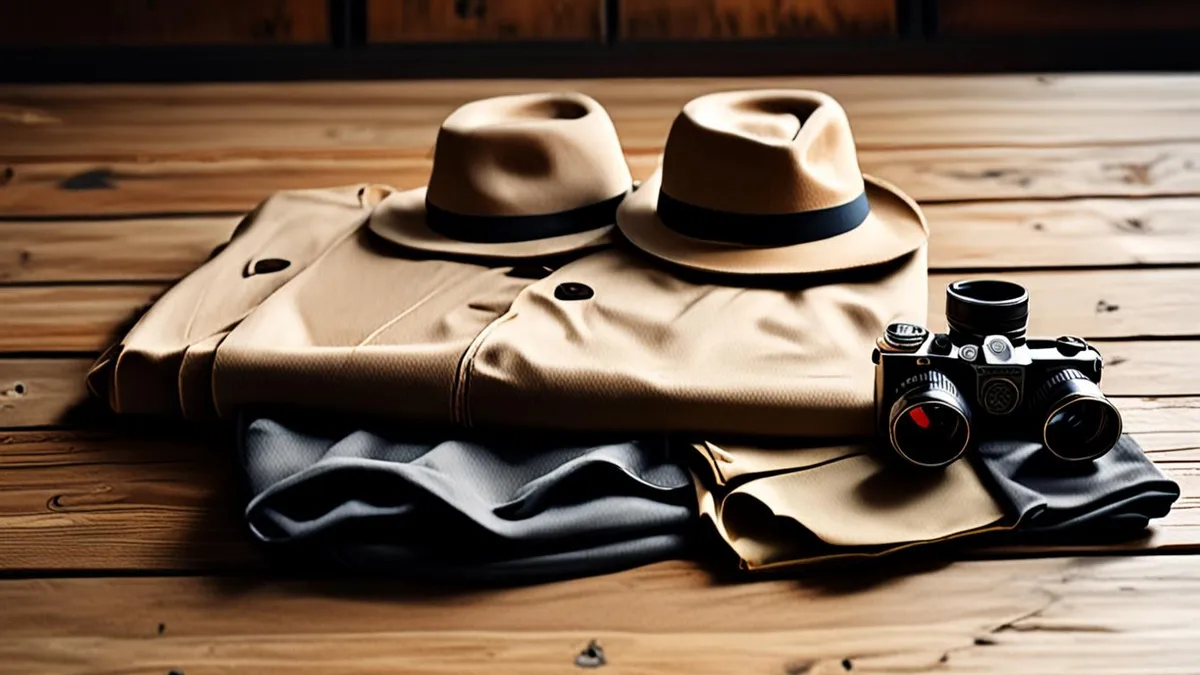
Wildlife on safari is usually spotted at a distance, and this is where binoculars become the single most-used item in your bag. Binoculars with 8×42 or 10×42 magnification are the standard for game viewing: strong enough to pick out a leopard in a tree hundreds of meters away, bright enough for dawn and dusk drives when most animals are active. If you share a pair with a travel partner, you will spend half the drive waiting your turn, so one pair per person is worth considering.
Your camera setup matters just as much. A zoom lens of 200mm or longer lets you fill the frame with distant wildlife, and spare batteries are essential because charging windows between game drives can be short. Many lodges only have power in the main area or run generators for a few hours, so charge everything during lunch and again at dinner. A few smaller items round out your kit:
- Headlamp or torch with a red-light mode: you will walk between your tent and the main lodge after dark, and a hands-free light on your head is far more practical than a phone flashlight while carrying gear.
- Extra memory cards: game drives fill storage fast when a sighting lasts twenty minutes, and there is no shop in the bush to buy another card.
- Dry bag or dust-proof pouch: fine dust on gravel roads works its way into every camera body and lens barrel, so a sealed pouch protects your electronics between drives.
- Lens cloth and blower: dust on your lens ruins photos, and a small blower clears grit without scratching the glass.
Health and Insect Protection Essentials
Safari lodges are often hours from the nearest pharmacy, sometimes a full day’s drive on rough roads, so anything medical you might need should come from your own bag. Pack a full supply of your personal medications in their original packaging, plus a few extra days’ worth in case your return flight is delayed. Add sunscreen with SPF 30+ and rehydration salts, which are genuinely useful after a long, dusty morning in the sun.
Many lodges keep a small first-aid kit and stock basic supplies, but you should not count on finding your specific prescription or brand. A quick chat with your doctor or a travel clinic before departure is a smart move, especially if you are heading into a malaria-risk area, since they can advise on what preventive medication suits your itinerary.
Even though many lodges provide insect repellent in the rooms, bring your own DEET-based repellent for game drives. The small bottles in your tent rarely travel well in a bumpy open vehicle, and you will want to reapply during stops rather than wait until you are back at camp.
- Motion-sickness tablets: useful if your itinerary includes light-aircraft hops or long stretches of gravel road, where the combination of heat, bumps and curves can catch even seasoned travelers off guard.
- Antiseptic wipes or a small antiseptic cream: handy for small scrapes and blisters, since open safari vehicles kick up a lot of dust and you may not be near running water when you need it.
- Lip balm with sun protection: dry-season air and wind on game drives chap lips quickly, and it is one of those items people forget until it is too late.
- A printed copy of your prescriptions: helps if you need to replace medication mid-trip or explain it at airport security.
What to Skip: Items Lodges Already Provide
One of the easiest ways to lighten your duffel is to stop packing things the lodge already handles. Nearly all safari lodges supply towels, soap and shampoo, and most keep a hairdryer in the room or available on request. Leaving those at home frees up a surprising amount of weight and space for the gear that actually matters.
Mosquito nets are another thing you can safely leave behind. Tented rooms and suites come equipped with nets as standard, and staff typically tuck them in during evening turn-down service. If you are ever unsure, a quick email to the lodge before you travel will settle it.
Camouflage clothing deserves a firm skip. In several African countries, camo patterns are restricted for civilians, and wearing them can cause real problems at borders or checkpoints. You do not need them anyway: neutral khaki, olive and beige tones blend into the bush just fine and are what guides wear themselves.
- Full-size toiletry bottles: decant what you need into small containers instead, since lodges supply the basics and you will not use a full bottle of anything in a week.
- Heavy books and guidebooks: most lodge libraries have a swap shelf, and a phone or e-reader covers your reading needs at a fraction of the weight.
- Umbrellas and heavy raincoats in dry season: lodges typically provide ponchos or lined vehicles when rain is a possibility, so check with yours before packing for wet weather you may never see.
- A separate beach towel or sarong for showers: lodge towels are usually replenished daily, and some camps even offer a laundry service for anything you hand-wash.
Packing Tips for Budget Travelers on Safari
Safari gear has a reputation for being expensive, but it does not have to be. A decent pair of binoculars and a set of proper safari clothing can easily add up to 200-500 USD if you buy everything new for a single trip. For a one-week safari, that outlay is hard to justify, especially when you are already watching every dollar of your lodge and flight budget.
The smarter move is to buy second-hand or borrow. Outdoor gear shops, online marketplaces and hiking clubs are full of lightly used binoculars and neutral-toned clothing at a fraction of retail price. Ask around among friends and family too; someone almost always owns a pair of binoculars gathering dust in a closet, and most people are happy to lend them out for a trip of a lifetime.
Weight matters just as much as money. Because light aircraft enforce strict baggage limits, every extra kilogram counts, so pack ruthlessly. Decanting your toiletries into small 100 ml containers shaves off real weight, and it also keeps you compliant if your itinerary includes commercial flight connections with liquid restrictions.
- A small dry bag or a set of ziplock bags: game drives kick up a lot of fine dust, and sealed bags keep cameras, phones and lenses clean between stops.
- Pack by outfit, not by item: plan each day’s layers in advance so you do not bring three jackets when one fleece and one windproof layer will do.
- Wear your heaviest items on travel days: boots, jeans and your fleece in your pockets and on your body do not count against the baggage allowance.
- Split gear with a travel partner: one shared bottle of sunscreen, one shared first-aid kit and one shared power bank between two people halves the weight for both.
Final Checklist Before You Zip Up
A smart safari packing list comes down to one idea: bring less, but bring the right things. Most first-time safari guests either overpack bulky luggage that small bush planes reject or forget essentials like neutral clothing and binoculars, so this list cuts the guesswork. A soft duffel under 15 kg, layered neutral clothing, binoculars, sun and insect protection, and personal meds cover 90% of your needs.
Everything else is either provided by the lodge or better rented or borrowed than carried. Skip what the lodge provides and rent or borrow the rest to travel lighter and cheaper. One last habit worth adopting: double-check your itinerary’s luggage limits and laundry options a week before departure, since these details shape every other packing decision you make. If this checklist helped you plan your trip, leave a comment or share this article with a fellow traveler.